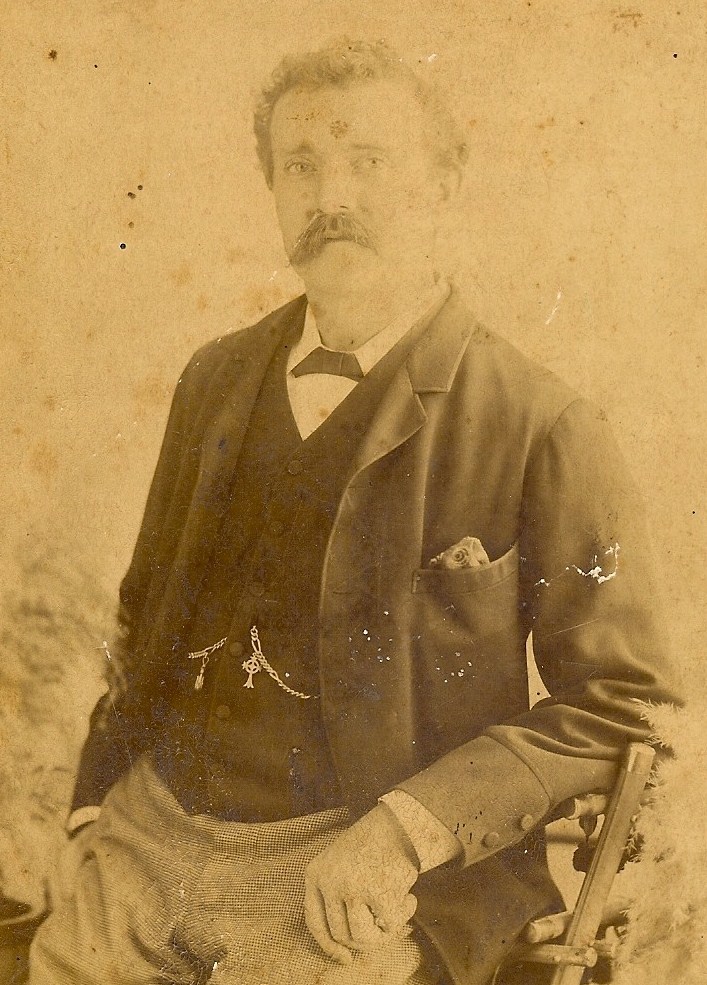
Meet my maternal great grandfather, Francis Charles Stewart Sendall, an ordinary man who it appears liked to chew on the left side of his considerable mustachio.
Francis was born in Bath, England, in 1852 to parents William Sendall and Caroline Neale. The Sendalls were ordinary working-class people. William Sendall was a butcher, and his father John was a blacksmith. Francis was a plumber and gas-fitter. Later in his life, Francis would become a whitesmith, someone who works with soft metals – but I’ll tell you about his ordinary life in a later post. This post (and the next about him) is about the extraordinary parts of his life.
On 21 February 1875, Francis married Eliza Jane Townsend, aka Jennie, in the Parish Church in the Parish of St Michael in Bath. In the 1881 census, Francis and Jennie were living as lodgers in the Parish of Newington, Borough of Lambeth, district of St Mary’s. Remember the name “Mary” it will be significant later.
In 1882, Francis made the first of three voyages to Sydney. In a later letter to his eldest son, Francis wrote that Jennie initially refused to come with him so he made his first voyage to Australia and back without her.
Francis finally persuaded Jennie to come to Sydney with him in 1884 but life in Sydney didn’t go well. Francis managed to bankrupt himself, and they returned to England. No sooner had they arrived than Jennie ended their marriage by running away with a man who just happened to have been on that voyage back to England from Australia!
And here’s the point where an ordinary man’s life turns left, and heads down an extraordinary road.
After the disastrous end of his marriage to Jennie, Francis returned to Australia, looking for something to do with his life. And that’s when he saw a unique opportunity…
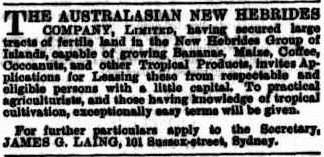
… got on a boat with another man, and sailed off to seek adventure. Francis went to live on the little island of Malo in the New Hebrides (Vanuatu), about as far away from Jennie as it was possible to be. On Malo, life was idyllic, yet absolutely terrifying! There were very few white men, possibly only 12, and they were all living among the cannibals.
Yes, I said CANNIBALS!
Francis set himself up as a merchant, trading in all sorts of goods, mostly derived from coconuts and coconut palms. He had native servants living on and around his property and he paid them their wages in tobacco! He lived through all kinds of troubles; loneliness, isolation, malaria and hurricanes. One of the most difficult of all the troubles happened not long after he arrived. The man that Francis had travelled to the New Hebrides with was eaten by the cannibals.
Yes, I said EATEN BY CANNIBALS!
Living among the cannibals was bad enough but as long as they all kept to themselves, everything was ok. When the cannibals ate a white man it sparked a major incident between the Europeans and the local people, which ended when British and French war ships took revenge by blowing up a few native villages with cannon fire!
Francis’ nearest white neighbours were Presbyterian missionaries. He attended their church services very regularly. He prayed daily, sometimes twice each day.
Remember that earlier I said you should remember the name “Mary”? Well the whole time that Francis was on Malo, he was waiting for someone named Mary to arrive. From time to time, a ship would arrive to collect his coconuts and he would anxiously prepare himself and his home because he would be expecting Mary to step off the ship.
How do I know all this? I know this because Francis was a writer (and probably would have been a blogger) and some of his letters and diaries have survived. He kept a diary during his entire time in the New Hebrides.
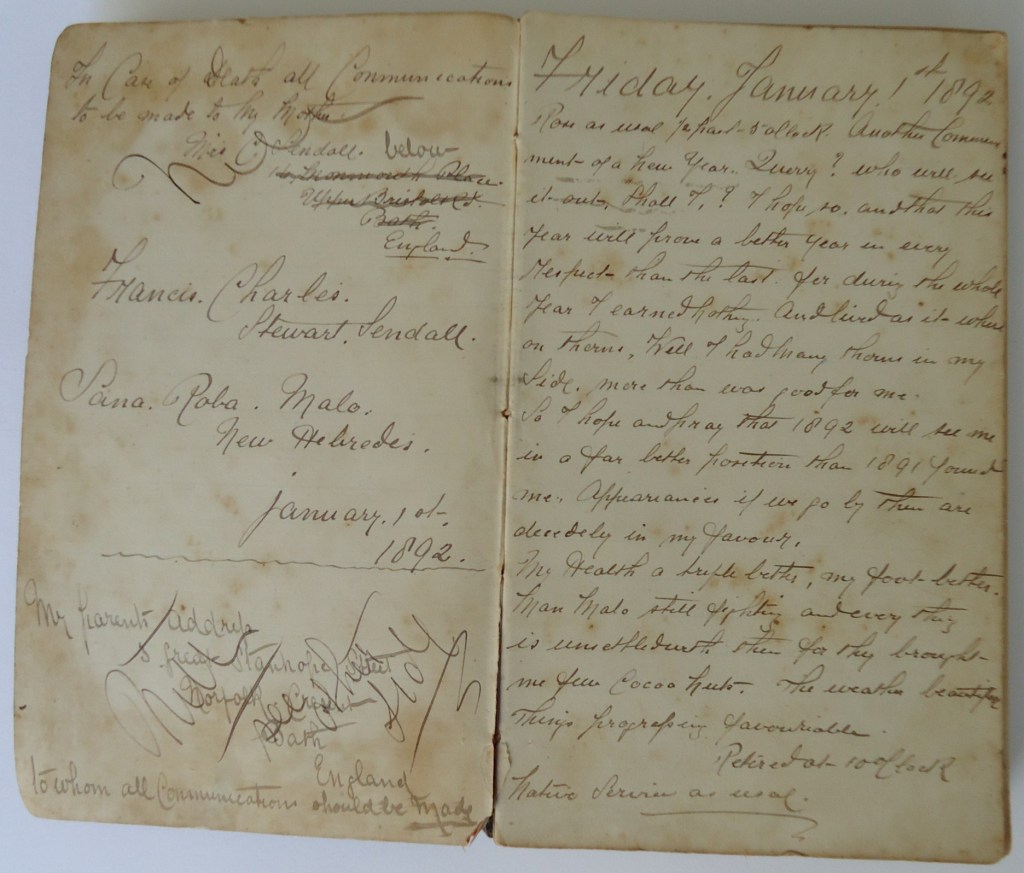
Francis wrote about his daily life and sometimes he wrote about the dramatic situations that he lived through. During one dramatic drama-filled night, Francis’ plantation was completely obliterated when a massive hurricane devastated the entire island paradise. Francis described the terrifying night, explaining that he was outside with a deaf native when the hurricane swept through. He hid behind a rock on the beach while extreme wind, driving rain and horrifying noise raged around him, flattening and destroying everything that he owned and had worked so hard to achieve.
I guess you’re probably wondering, did Mary arrive? You’ll have to read the next Francis post to find out…
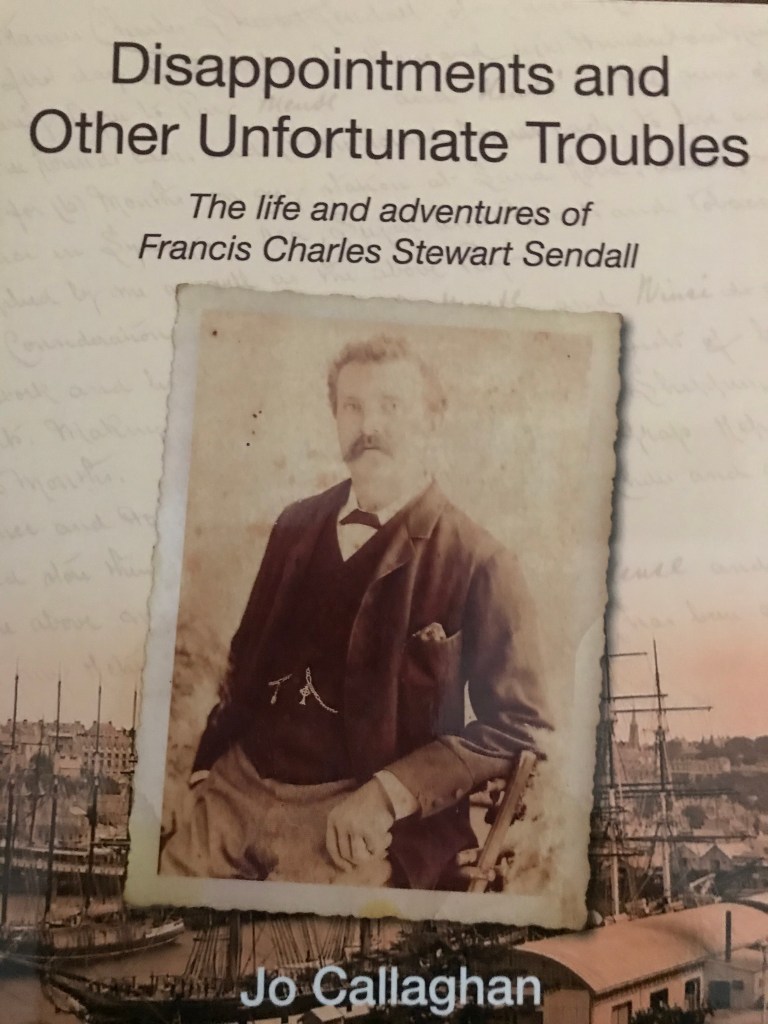
I have transcribed Francis’ entire diary, which was a months-long labour of love. I have also written the story of Francis life in my book ‘Disappointments and Other Unfortunate Troubles’, which I’m happy to send to you if you’d like a copy. Drop me a line.
 KINdling