How often can any of us ever say we were ‘the first’ to do something?
My 3x great grandparents were one of three families who were the first to ever live in the Australian town of Yarramalong. What an amazing ‘first’.
In 1852 Alexander and Elizabeth Hill of Antrim Ireland, paid £8 to board the ship ‘Irene’ and headed for Australia. I’m not sure I would have the courage to move to the great unknown on the other side of the world by myself, and they did it with their seven children! Our pioneering ancestors were so brave.
Along the journey the Hills met the Stinson and Waters families, and together the three families made their way to timber and dairy country near the Central Coast north of Sydney. At that time, the area was a large farm called Yarramalong.
The first mention of Yarramalong in newspapers of the day is in 1833, when four lots of 640 acres were granted to Frederick Augustus Hely, the NSW Chief Superintendant of Convicts. Hely died in 1836.
The next mention of Yarramalong in newspapers was in 1854, when this advertisement appeared in the Sydney Morning Herald
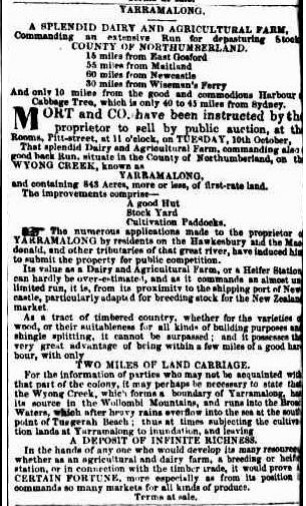
Late in 1854, numerous parcels of land began to be advertised for sale at Yarramalong. I guess the farm didn’t sell and the owner decided to subdivide.
Alexander and Hamilton Hill were granted 54 acres in 1856. Presumably the Stinson and Waters families received their share of land as well.
The three families cleared their land and built their homes. More dairy farmers and timber men began to settle in the area. As the parcels of land became occupied a little village grew up where a single farm once stood and the township of Yarramalong was born.
By the 1870s the Hills owned a lot of land. Alexander’s sons William (known as Billy) and Hamilton (known as Hamp) embraced the opportunities that the land had to offer. Through the years, they grew oranges, persimmons, and all kinds of vegetables. They worked as ‘timber-getters’ and dairymen. When Alexander died, the brothers split their land into two working farms.
Through the years the Hills were involved in local sporting activities. John Hill, a brother of Billy and Hamp, was a member of the first cricket team to play in the district in 1857. Billy’s property was used by the Yarramalong Jockey Club for horse racing by the bank of his lagoon. The pioneer settlers would gather there to race their horses and to enjoy each other’s company.
The children of the three families virtually filled up the local school.
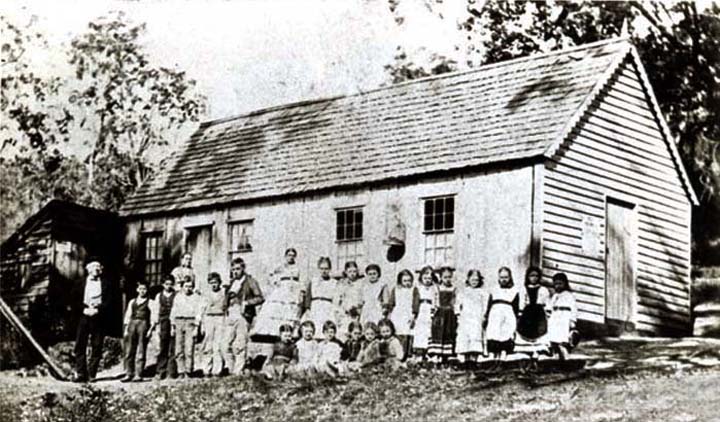
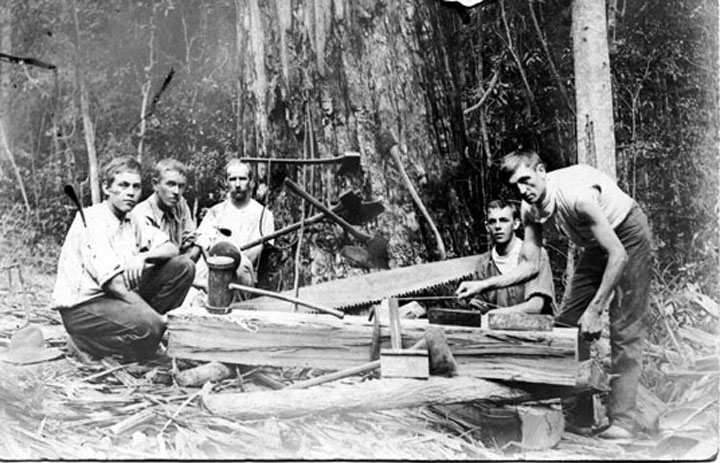
Yarramalong school c1882 and Yarramalong timber cutters
But farming and logging wasn’t for everyone. My great grandfather, William Alexander Hill (another Billy), packed up his belongings and moved to Sydney in the early 1900s, where he became a quarryman.
Quarrying of Sydney’s iconic sandstone dates back to at least the 1820s when a few small quarries are recorded close to the city. By the mid-1840s the Sydney peninsula was crowded with them. The sandstone was used for the construction of buildings in the city, as well as bridges, railways and wharves.
The more famous of Sydney’s quarries were named Paradise, Purgatory and Hellhole. With names like that, it isn’t hard to imagine what life might have been like for a Sydney quarryman.
Young Billy married Emily Goodson Leahy in Sydney in 1912.
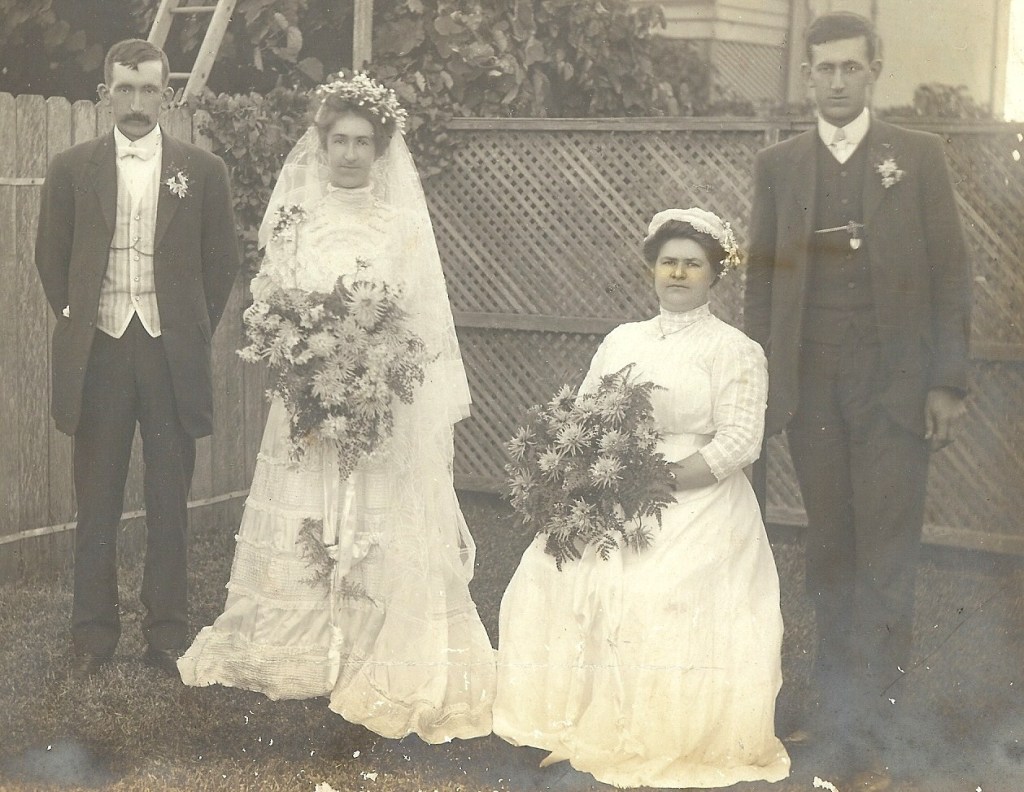
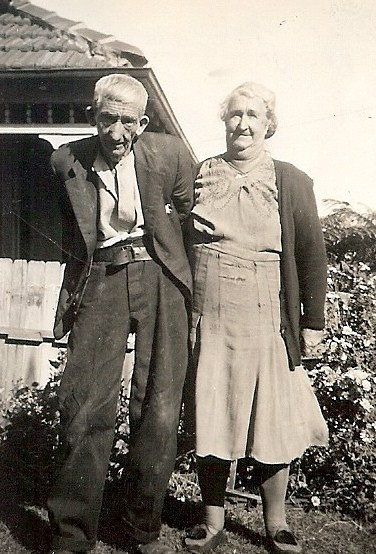
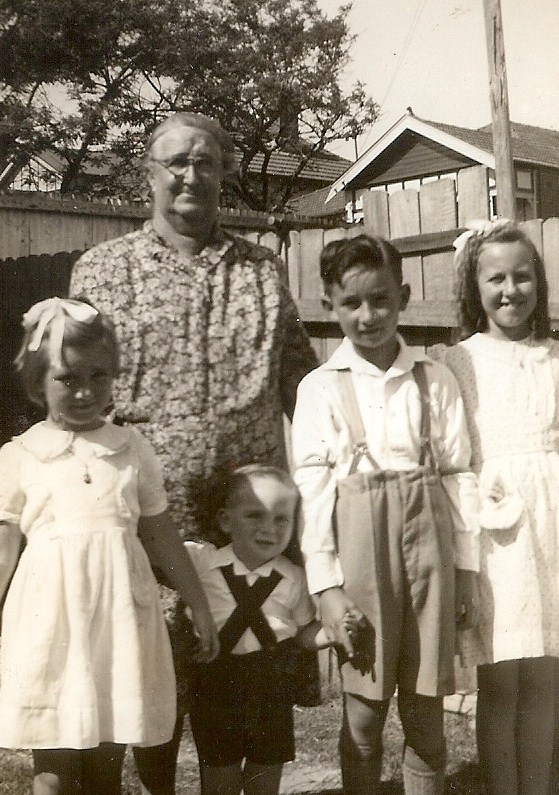
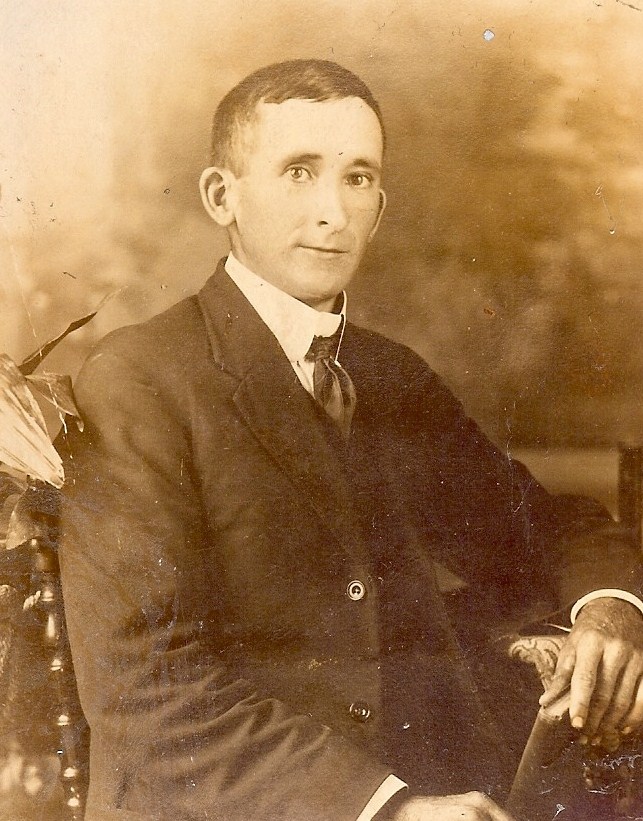
Young Billy never returned permanently to Yarramalong, but the Hill farms stayed in the family until late in the 20th century so until then, visits back to Yarramalong and family holidays at the farm were frequent.
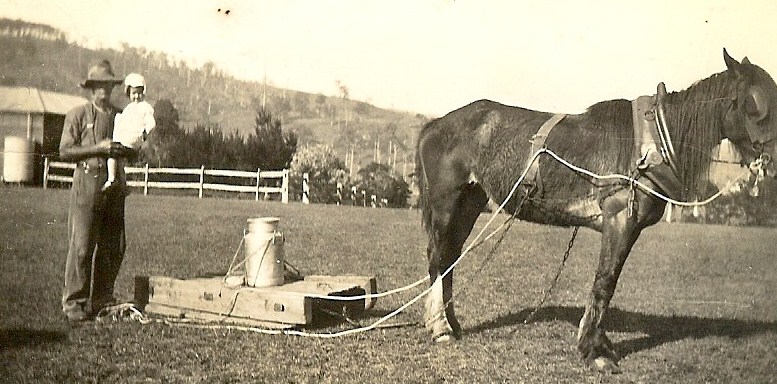
Yarramalong in the 21st century is a green, peaceful and sleepy village. It consists of a few houses, a shop and a school house. Along each side of the road for several kilometers are hobby farms.
On one side of the road is the cemetery, where Alexander, Hamp and the older Billy are all buried, along with their wives and some of their children. Their graves look over the rolling hills and the sleepy village. The cemetery is no longer used, and is slowly turning back to earth. Alexander’s headstone is on the ground. Hamp’s grave stands tall and proud, while Billy’s headstone has fallen over and the words are barely visible.
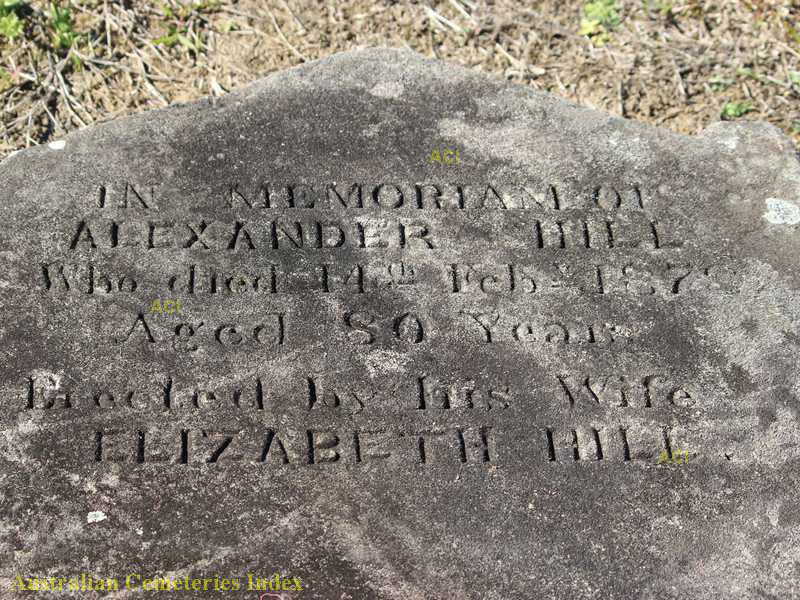
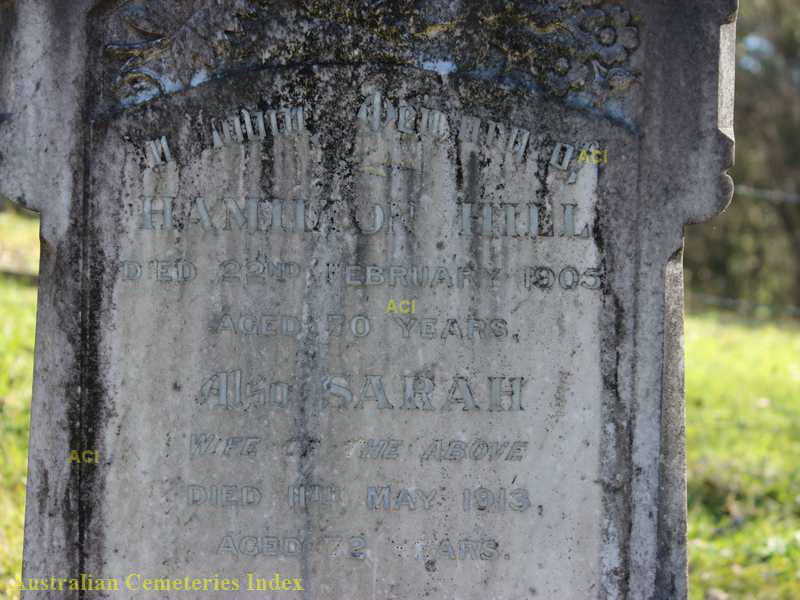
The cemetery and the pioneers within are turning back to earth, but the sleepy idyllic village of Yarramalong lives on.
Long may Yarramolong last, in honour of those who came ‘first’!
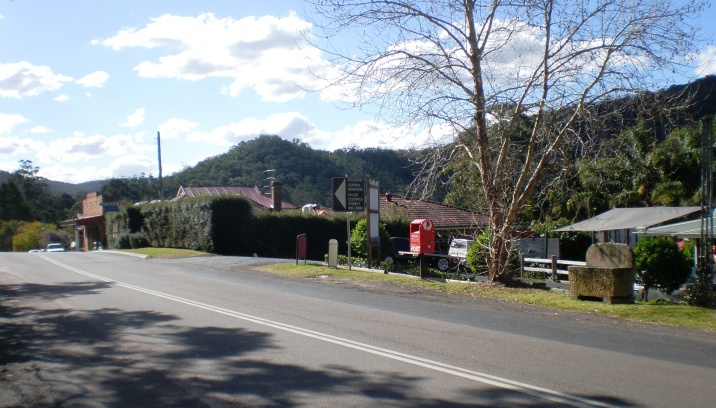
By Rugger36d – Own work, CC BY 3.0,
https://commons.wikimedia.org/w/index.php?curid=9497555
 KINdling