Doctor Allayne, Mr Wise, and the Reverend Sheridon, all of the Immigration Board, came on board the ‘Samarang‘ as she lay in Sydney harbour. The crew of Samarang were tired and impatient to offload her passengers. After 108 days of being relentlessly tossed about on an unforgiving sea, they were all keen to go ashore.
The three gentlemen carefully inspected each of the 13 men and 22 women, who were single and travelling alone, or widowed with a grown-up child, or coming to join their husbands or a sister or brother in the colonies. All of the passengers were Irish and all of them were of working age; the oldest was 42 and the youngest was 16.
The judgement cast by the inspectors was unanimous and universal; in terms of their “state of bodily health, strength and probable usefulness” the single word “Good” proclaimed each and every passenger fit to come ashore.
It was the 16th of February 1869 when Timothy Callaghan’s feet first touched Sydney soil. At 22, he had left his parents – Jeremiah and Julia – at home on the farm in Dunnamore, County Cork, and traveled to this place on the other side of the world in search of a new life and new adventures.
At first, he lived with Uncle Patrick, his mother’s brother. Patrick Buckley, with his wife and children, lived on the shores of the southern half of the Pyrmont peninsula, in an area called Ultimo; bounded by Darling Harbour in the east, Blackwattle Bay in the west, Broadway in the south and Fig Street in the north.
Ultimo was hardly somewhere to aspire to live. The peninsula had started out as farmland for the early settlement, but within decades it had become home to workshops, slaughter yards, boiling-down works and other industries that took advantage of the waters of Blackwattle Creek. Unsanitary little cottages had been hastily erected by landlords anxious to provide for the working poor; but probably more anxious to provide for themselves. By the 1850s, the working poor were living in cramped conditions, ‘cheek by jowl’ with their domestic animals, with no water to speak of, other than the persistent hindrance of flooding and running sewage that gave rise to an unimaginable stench.
Refuse and offal from the slaughter yards might be taken out on the tide, but often remained to rot on the mudflats. Floodgates, installed to hold back the waters and build up enough momentum to flush the area, were not always effective, as industrial users in adjoining Chippendale dammed the creek for their own use.
https://dictionaryofsydney.org/entry/ultimo
Quarries sprang up on the peninsula, and soon the area became renowned for producing the finest Sandstone which gave rise to the finest and most handsome of public buildings in the centre of Sydney. The much sought after stone and the success of the quarries provided no direct benefit to the people of Ultimo, most of whom were too poor and too poorly educated to ever engage with the majority of the organisations occupying the fine stone buildings that defined the evolving city-scape.
By the 1870s the wool industry was expanding rapidly and the rich wool companies built massive wool stores in Ultimo. From 1875 the Colonial Sugar Refinery (CSR) dominated the northern tip of the peninsula. The company created work, controlled housing and polluted the air and water. The air was thick with the sickly sweet smell of sugar and molasses.
Staple foods, such as milk and flour were distributed from Ultimo and Pyrmont. Uncle Patrick owned a dairy in Ultimo Street, on the border between Ultimo and Glebe. In 1890 there were 8 dairies in the city, 5 of them in Pyrmont or Ultimo. The Headquarters of the Dairy Farmers Co-operative Milk Co. Ltd was established in Ultimo in the early 1900s, helping farmers to collectively market their milk and butter directly to the city.
It didn’t take long for Timothy to prove the official assessment of the Immigration Board; Timothy Callaghan was indeed useful. He worked the dairy, tended the cows, helped with the milking, and carted the milk to the many stores in and around the city. It was hard work and the days were long, starting well before the sun came up, and finishing in the late afternoon. The milking and carting all had to happen as early in the day as possible, to keep the milk from the damaging heat of a Sydney summer.
On Saturday 17 July 1875, Timothy Callaghan and Mary Carroll stood in front of Father Slattery, and friends Richard Fitzgerald and Bridget Flynn, at Sydney’s St. Benedict’s Catholic Church. Perhaps it was love, or perhaps it was a marriage of necessity; baby Matthew arrived not quite six months later.
Mary was one of six children born to John Carroll and Margaret Harney. If you’re interested in ancestry DNA, I seem to have inherited quite a lot of Caroll DNA.
John Carroll was a toll bar keeper on the Jambaroo and Kiama Parish Road, about one mile from Kiama. Later, he kept the toll bar on Old South Head Road, near to where Timothy and Mary were living in the early years of their marriage. When Timothy and Mary’s next child, Margaret was born, the growing family lived in Chippendale; a short walk from Uncle Patrick’s dairy, which by now was in its final days.
Timothy’s brother, Daniel, had also made his way to Sydney. Keeping things Irish, Daniel married Bridget Kelly in Sydney on Monday 29 November 1886. Timothy and Daniel’s children shared similar Christian names, which might have given an outsider an impression of closeness, but their names were handed down and across in a naming tradition that saw children named after parents, grandparents, aunts and uncles. It was the Irish way.
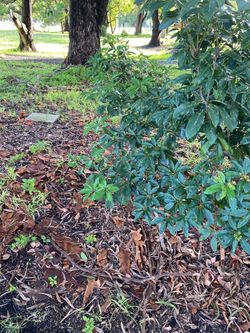
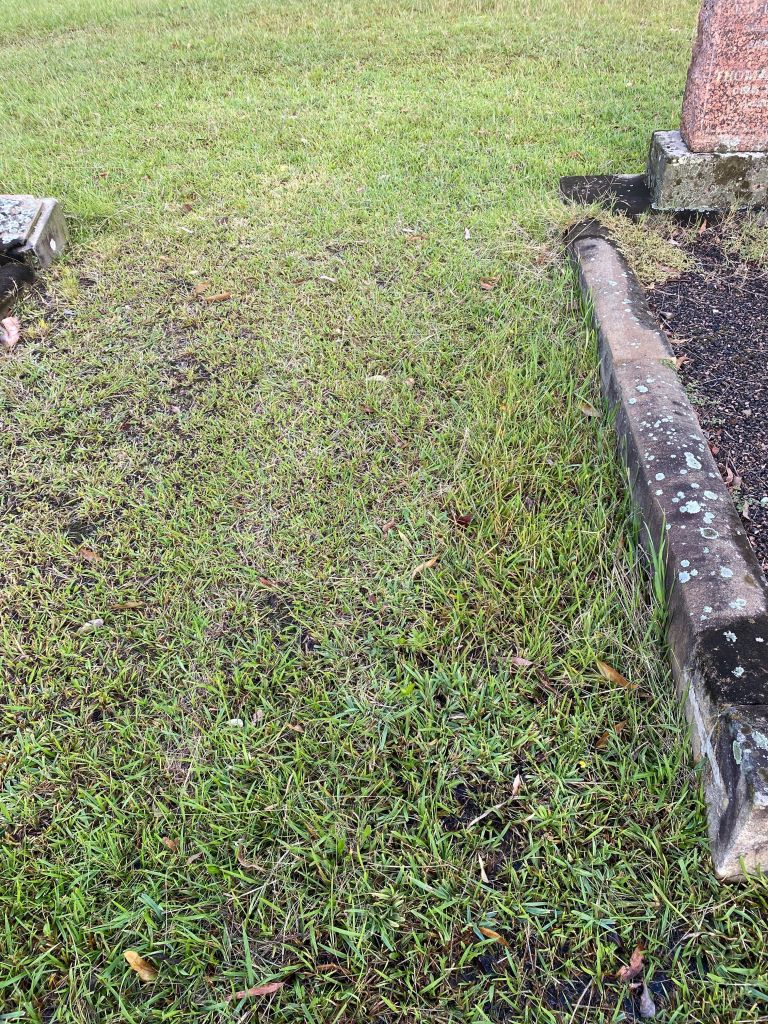
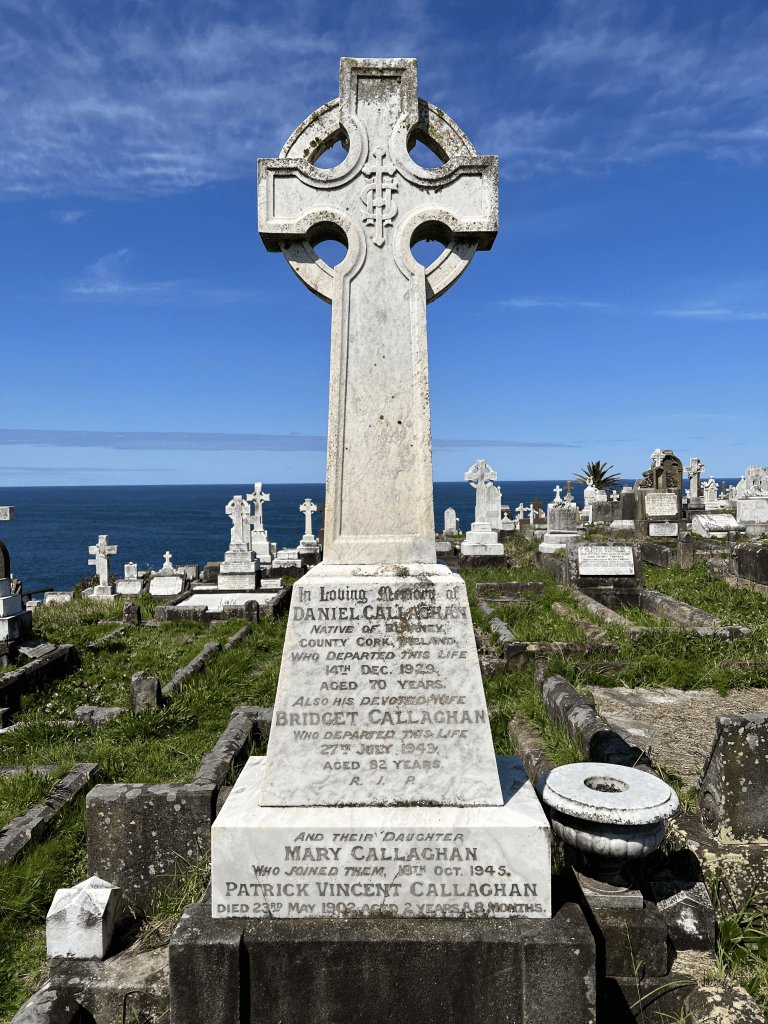
Mary died in 1897 at the young age of 48. Timothy outlived her by quite a distance. He died in 1926, at the age of 76. Both are buried in Sydney’s Rookwood cemetery. Daniel died in 1929 at the age of 70 and Bridget outlived all of them, living until the 1940s and the good old age of 84. Daniel and Bridget are both buried in Sydney’s Waverley cemetery.
Timothy was father to 8 children and between the two Irish brothers, there were 15 Callaghan offspring, who filled Sydney’s suburbs with countless little Australians… who were all no doubt good… and probably useful.
 KINdling