Shortly before Christmas, 1908.
That’s as precise as I can be about the moment that my great grandmother, Miriam, had a dalliance with a man named Collman.
My ancestry DNA results don’t tell me his name but they do indicate that my grandmother’s father descended from a man named Collman and a woman named Weston.
Mother nature is a trickster. Just at the right time in Australia’s history, two Collman brothers married two Weston sisters and between the two couples they had five sons. Any one of those five boys could be my man.
So far it’s been impossible to pick the right one simply by using my DNA matches, so the only thing I can do is to study each of their lives to see whether any of them could be ruled out for some reason, or whether one in particular will jump out as the obvious candidate.
Remembrance Day is just around the corner so I’ve decided I’ll start with Robert for reasons that will soon become clear.
A search of the New South Wales birth index reveals that Robert Herbert Collman was born at the very end of November 1889 and the event was registered the following year, giving it an 1890 registration number. The index says his parents were Charles and Louisa Collman and that he was born in Cooma which is the largest regional town in the Snowy Mountains of New South Wales. I suspect that the record probably says that he was born at or near the family homestead at Boloco Creek near Jindabyne and that his birth was probably registered in Cooma the next time that someone went into town.
The images below were taken in the Snowy Mountains. As you might expect from its name – it’s mountainous country, covered in snow during winter. So many trickling creeks run through the ridges and gullies and transform during the thaw into the raging torrent known as the Snowy River.
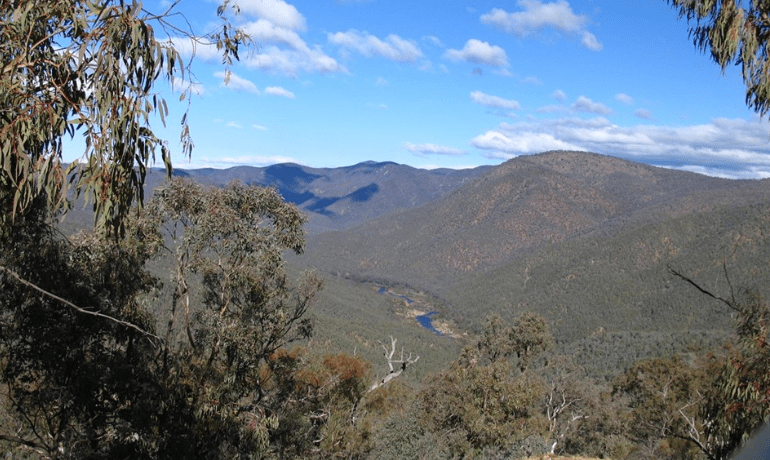


The Snowy Mountains are renowned for horses and horsemen so it wouldn’t surprise me to learn that Robert was a great rider. Are you familiar with a poem called The Man From Snowy River by Andrew Barton Paterson, otherwise known as Banjo Paterson?
If you don’t know it you really should look it up. It’s a classic Australian bush tale featuring Banjo’s much-loved character, Clancy of the Overflow, and a brave young horseman – the man from Snowy River. The poem sits the reader in the saddle behind Clancy, as he and others try to catch a thoroughbred horse that has galloped off with a mob of wild horses, and then follows as the young man and the mob plunge off the edge of a steep ravine.
I’ve pulled a couple of random stanza’s from Banjo’s poem. Are you ready? Come and ride down the mountain side with Clancy and me…
"Then fast the horsemen followed, where the gorges deep and black
Resounded to the thunder of their tread,
And the stockwhips woke the echoes, and they fiercely answered back
From cliffs and crags that beetled overhead.
And upward, ever upward, the wild horses held their way,
Where mountain ash and kurrajong grew wide;
And the old man muttered fiercely, "We may bid the mob good day,
No man can hold them down the other side."

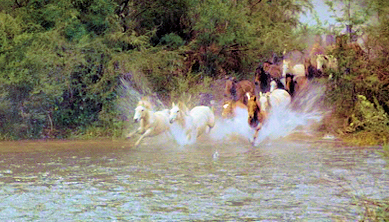
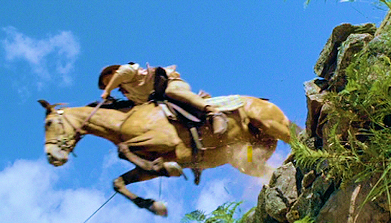
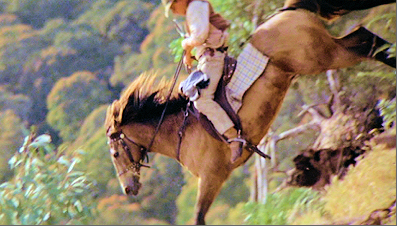
"When they reached the mountain's summit, even Clancy took a pull,
It well might make the boldest hold their breath,
The wild hop scrub grew thickly, and the hidden ground was full
Of wombat holes, and any slip was death.
But the man from Snowy River let the pony have his head,
And he swung his stockwhip round and gave a cheer,
And he raced him down the mountain like a torrent down its bed,
While the others stood and watched in very fear."
… but to find out what happened to the young horseman you’ll have to read Banjo’s poem.
Let’s get back to Robert Collman!
Robert would have been almost 19 when my grandmother Edna was born. That means he’s absolutely in the frame, especially if I can place him in the same location as Edna’s mother Miriam towards the end of 1908. It means he’d have to have been in the “big smoke” of Sydney or in the tiny town of Mallanganee in far northern New South Wales, or she’d have to have been in the Snowy Mountains. Both of them. In the same place. At just the right moment.
Those places are a long way away from each other. It’s nearly five hundred kilometers from Jindabyne to Sydney (or about 280 miles) and it’s more than one thousand kilometers from Jindabyne to Mallanganee (or about 750 miles).
Something quite significant would have to have happened to take one or both of them so far away from their usual home.
But nothing that I’ve found puts them both in the right place at the right time.
The nearest I can get is when Robert enlisted in the Australian Imperial Force in Goulburn – half way between the Snowy Mountains and Sydney – in October 1915, aged 25.


From Goulburn, Robert went to Sydney where he embarked on Her Majesty’s Troopship Ceramic on 13 April 1916. He was assigned to the 53rd Battalion. The Australian War Memorial website says
The battalion arrived in France on 27 June 1916, entered the front line for the first time on 10 July, and became embroiled in its first major battle on the Western Front, at Fromelles, on 19 July. The battle of Fromelles was a disaster. The 53rd was part of the initial assault and suffered grievously, incurring 625 casualties, including its commanding officer, amounting to over three-quarters of its attacking strength. Casualty rates among the rest of the 5th Division were similarly high, but despite these losses it continued to man the front in the Fromelles sector for a further two months. The 53rd spent the freezing winter of 1916-17 rotating in and out of trenches in the Somme Valley.Australian War Memorial website “53rd Battalion”
This young man from the mountains, with a whole life ahead of him, had a war that was awfully brief. His service file is painfully devoid of details; between 16 May and 22 July 1916, he moved from Suez to Tel-El-Kabir to Alexandria to Marseilles to Etaples where he joined the 53rd.
On 1 September 1916, Robert was appointed Lance Corporal, on 4 October 1916 he went to Runners School, on 27 October 1916 he was promoted to Temporary Corporal, and on 2 Nov 1916 he was killed in action in the field. It doesn’t say exactly where, just “France”.
If Robert was in the Somme Valley with the 53rd in November 1916, he may still lay where he fell… in the mud in a 12km strip… with hundreds of thousands – no, more than a million – wasted young lives on every side.
The Somme offensive, also known as the battle of the Somme, is the term given to series of battles fought between 1 July and 18 November 1916 along the Somme Valley in France… When exhaustion, and the cloying mud of a particularly wet autumn, caused the offensive to be abandoned in November, the allied forces had managed to advance only 12 kilometres… around 500,000 German casualties… at a cost of 420,000 British and Dominion, and 200,000 French…
Australian War Memorial website “Somme Offensive”
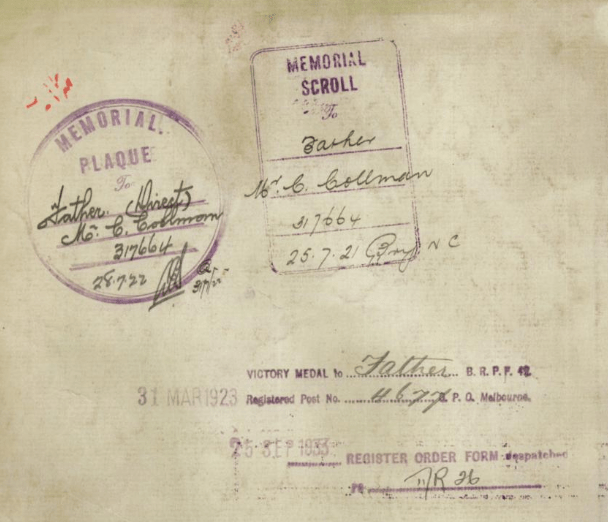
It isn’t impossible that Robert was my grandmother’s father, but was it likely?
I could have waited until Remembrance Day but I decided it meant far more to me to post this on the anniversary of Robert’s death.
2 November 1916.
Lest We Forget
 KINdling